
Polyamory, the practice of engaging in multiple romantic or emotional relationships simultaneously with the informed consent of all parties involved, is a diverse and ever-evolving relationship style. Within the realm of polyamory, various relationship configurations have emerged, each with its unique dynamics and structures. In this blog post, we’ll explore some common polyamorous relationship configurations, providing definitions and insights into how they function within the polyamorous landscape.
**1. Triad:
- Definition: A triad consists of three individuals who are all romantically or emotionally involved with each other. It can take various forms, including hierarchical (with primary, secondary, and tertiary partners) or non-hierarchical (with equal standing for all three members).
**2. Quad:
- Definition: A quad expands on the concept of a triad, involving four individuals who are all interconnected through romantic or emotional bonds. Similar to triads, quads can have hierarchical or non-hierarchical structures.
**3. Closed Triad:
- Definition: A closed triad is a specific configuration where three individuals are romantically involved with each other, and the triad is exclusive, meaning they do not engage in relationships with people outside of the triad.
**4. Polycule:
- Definition: A polycule is a visual representation of the interconnected relationships within a polyamorous network. It often resembles a complex web, with lines connecting individuals who are in relationships with one another. A polycule can encompass various configurations, including triads, quads, and more.
**5. Mono/Poly:
- Definition: Mono/poly is a relationship configuration where one partner is monogamous (preferring one romantic partner) while the other partner identifies as polyamorous and desires multiple romantic partners. This dynamic requires open communication and negotiation to ensure the needs and boundaries of both partners are met.
**6. Hierarchical and Non-Hierarchical Relationships:
- Definition: In hierarchical relationships, partners are categorized into different levels of importance or priority, such as primary, secondary, and tertiary. Non-hierarchical relationships, on the other hand, prioritize equal standing among all partners, with no rigid distinctions.
**7. Garden Party Polyamory:
- Definition: Garden Party Polyamory describes metamours who only spend time together at key events, such as their mutual partner’s birthday. These metamours will usually have a friendly connection with minimal interaction outside of these events.
**8. Solo Poly:
- Definition: Solo polyamory is a relationship style where an individual maintains a high degree of independence and autonomy while engaging in multiple relationships. Solo polyamorists often prioritize their individual needs and do not seek to merge their life paths with partners.
**9. Kitchen Table Polyamory:
- Definition: Kitchen table polyamory refers to a style where all members of a polyamorous network are comfortable sitting around the “kitchen table” together, meaning they are amicable and open to direct communication and interaction with all other partners within the network.
**10. Parallel Polyamory:
- Definition: Parallel polyamory involves individuals who engage in multiple relationships but prefer to keep their partners separate, with minimal interaction between them. They may choose not to interact with their partners’ other partners.
**11. Sandlock:
- Definition: A sandlock configuration involves a group of individuals who are interconnected through various romantic or emotional relationships. This type of polyamorous network resembles a sandbox where all participants play together, fostering a sense of unity.
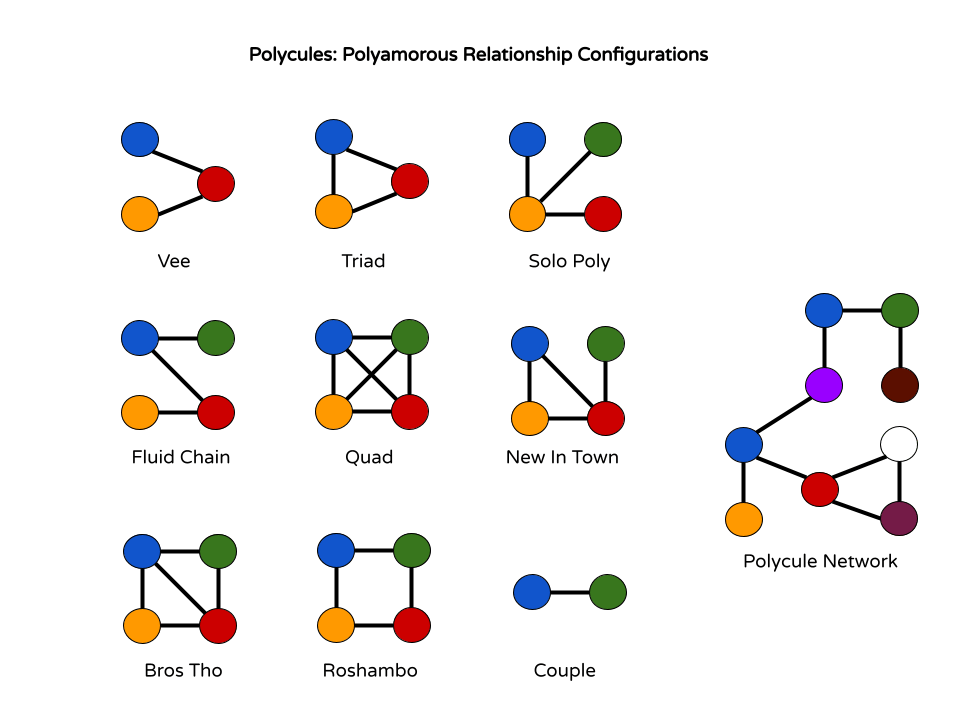
Polyamory offers a rich tapestry of relationship configurations, each catering to the diverse needs, preferences, and desires of individuals engaged in consensual non-monogamy. While these definitions provide a glimpse into the polyamorous landscape, it’s crucial to remember that relationships are deeply personal and can evolve over time. Effective communication, consent, and respect among all partners are essential to navigating the intricacies of these diverse relationship structures successfully. Whether you find yourself in a triad, quad, or any other configuration, embracing the principles of polyamory can lead to enriching and fulfilling connections.